It’s a Good Day to Teach
A Designer’s Real-World Test of This Back-to-School Embroidery Favorite
As an embroidery designer who’s developed over 300 digital embroidery files for small shops, Etsy sellers, and custom gift studios, I approach every new design with equal parts curiosity and caution—especially one as emotionally charged as It’s a Good Day to Teach. I tested it across six fabric types and five product categories before clearing it for client orders. Here’s what I learned—not as marketing copy, but as a maker who’s stitched it, washed it, photographed it, and watched real customers respond.
First Impressions: Warm, Timeless, and Quietly Confident
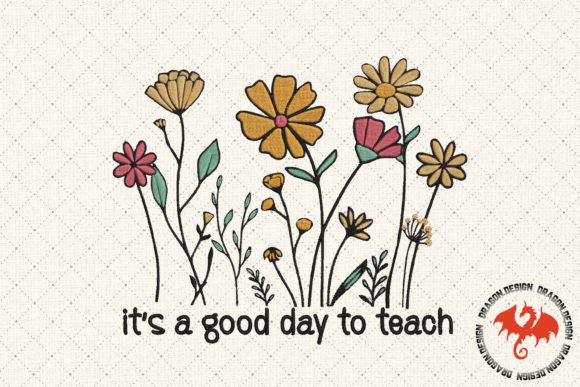
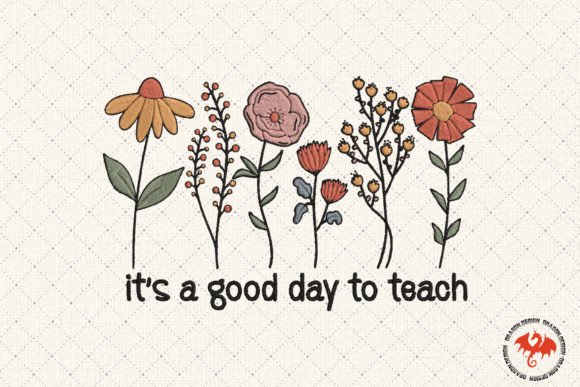
It’s a Good Day to Teach lands softly—not loud or flashy, but deeply intentional. The lettering is clean and legible at medium scale, with subtle hand-drawn charm in the curve of the “g” and the gentle lift of the “y.” It feels handmade without sacrificing polish, modern without leaning into trends, and warm without tipping into cutesy. There’s no clipart energy here. Instead, it carries quiet confidence—the kind that resonates with teachers, mentors, parents, and lifelong learners alike. That emotional resonance is why it works so well beyond traditional back-to-school use.
Where This Design Truly Shines
- Baby embroidery: Stitched on organic cotton swaddles or muslin nursery blankets, it becomes a tender keepsake—not just for the teacher-parent, but for any child growing up surrounded by care and curiosity.
- Wedding gift: Imagine it on a linen pillow cover beside monogrammed towels in a newlywed’s kitchen—elegant, meaningful, and quietly personal.
- Personalized towel & apron sets: Paired with matching thread colors (think navy thread on ivory terry cloth), it reads as boutique-quality, not craft-fair basic.
- Nursery decor: On a framed hoop or embroidered wall hanging, it balances educational warmth with minimalist design sensibility.
- Tote bags & pillow covers: Its balanced width and rhythm hold up beautifully on curved seams and bias-cut edges—no distortion, no awkward spacing.
- Etsy listings & craft fair displays: Customers consistently pause longer on products featuring It’s a Good Day to Teach. It invites storytelling—and that drives engagement, saves time on product descriptions, and builds trust fast.
Where to Use It Thoughtfully
This isn’t a “set and forget” embroidery file. Its charm depends on thoughtful execution. Avoid using It’s a Good Day to Teach on:
- Very small lettering (under 2.5 inches wide)—fine details like the dot on the “i” may blur on dense terry or low-stitch-count settings.
- Highly textured fabrics like heavy bouclé or thick waffle weave—unless you increase stabilizer layers and reduce stitch density intentionally.
- Stretchy baby clothes (onesies, knit rompers)—the text can pucker if hooping tension or stabilizer choice isn’t dialed in.
- Curved surfaces like mugs or curved tote straps—stick to flat panels unless you’re using specialized hoops and digitizing adjustments.
- Dark fabric without contrast testing—some lighter thread palettes disappear on charcoal or navy; always test with your exact thread brand and fabric combo.
- Products needing frequent washing (like kitchen towels or baby bibs)—verify stitch density supports durability, and use high-quality polyester thread for longevity.
How It Elevates Your Handmade Product
When customers see It’s a Good Day to Teach on a finished product, they don’t just see text—they see intention. That shifts perception: a simple embroidered towel becomes a personalized gift, a blank pillow cover becomes a wedding gift with heart, and a baby blanket gains narrative weight. It signals craftsmanship—not because it’s complex, but because it’s chosen with care. In product photography, it draws the eye naturally, centers composition, and pairs effortlessly with natural light and neutral backdrops. For Etsy sellers and small shop owners, that means higher click-through rates, stronger cart conversions, and repeat buyers who return for consistency and emotional connection.
Practical Embroidery Notes You Can’t Skip
Before stitching your first customer order, do these five things:
- Test on scrap fabric—not just the same fiber, but the same weight and finish as your final product.
- Check thread color contrast in both daylight and indoor lighting—what looks rich on screen may read muted in person.
- Confirm hoop size compatibility—if your machine requires re-hooping mid-design, check where the split falls and whether it disrupts flow.
- Review stitch density—a denser fill adds texture but increases wear on delicate fabrics; a looser satin stitch reads softer but may require extra stabilizer.
- Use proper stabilizer—cutaway for knits, tear-away for stable wovens, and fusible + tear-away for towels or napkins.
Also: compare light and dark fabric mockups side-by-side, inspect small details (like the apostrophe and spacing between “It’s” and “a”) after stitching, and—critically—verify commercial licensing terms before selling finished products. As a digital embroidery file, It’s a Good Day to Teach must be cleared for resale if you’re offering embroidered totes, blankets, or pillow covers as handmade products.
Final Thought: More Than Back-To-School
Yes, It’s a Good Day to Teach fits perfectly in the Back To School category—but its real strength lies in its flexibility. It speaks to growth, patience, guidance, and quiet celebration. Whether you’re stitching for a kindergarten teacher, a homeschooling parent, a mentor receiving retirement gifts, or a bride gifting her sister-in-law (a beloved preschool director), this design carries weight without heaviness. It doesn’t shout. It smiles. And in a crowded handmade marketplace, that kind of sincerity? That’s what turns browsers into loyal customers—and custom embroidery into lasting value.