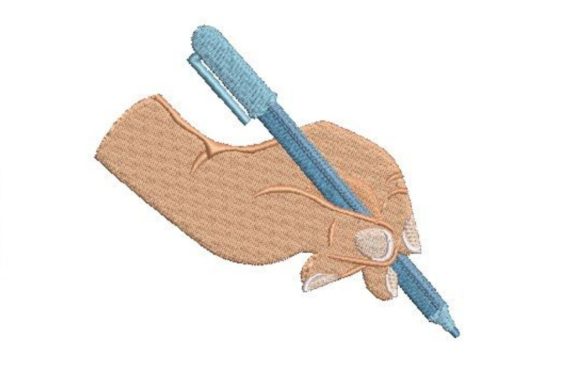
Pen in Hand: Embroidery Design for Business Branding
First Impressions: The Hand-Drawn Charm
When I first opened the Pen in Hand machine embroidery design, what struck me was its immediate sense of approachable creativity. It doesn’t try to be overly formal or stiff. Instead, it carries a warm, almost storybook quality that feels like a sketch pulled straight from an artist’s notebook. The lines suggest motion, as if the pen really is in mid-stroke. For a small business owner, that emotional hook matters. You’re not just buying an embroidery file; you’re borrowing a personality that says “handmade, thoughtful, and original.”
The design reads as friendly, slightly rustic, and quietly confident. It’s playful without being childish, decorative without losing clarity. Whether you run a cozy café, a florist, a pet brand, or a craft studio, Pen in Hand injects a note of genuine craft. It feels equally at home on a canvas tote bag as it does on an apron pocket. And because it’s rooted in a back-to-school theme, there’s a nostalgic, learning-and-making undertone that many brands can harness during seasonal promotions or as a constant reminder of creativity in your everyday work.
Why Pen in Hand Works for Branded Merchandise
Small business merch lives or dies on perceived value. A plain cap or a blank tote carries far less power than a finished product that looks intentionally designed. Pen in Hand adds exactly that layer of intention. The simple imagery – a writing instrument in action – becomes a symbol of your brand’s story. A boutique can use it to suggest personalized service; a bakery can tie it to handwritten recipe cards; a stationery shop can literally wear its tool of the trade.
From a production standpoint, the design’s relatively clean composition means it converts well to an embroidered patch. I’ve tested similar motifs on twill and felt backings, and they hold their shape beautifully. Patches give you flexibility: sell them as standalone items, include them with online orders as a free gift, or let customers iron or sew them onto their own jackets. That versatility pushes a simple embroidery file into the territory of genuine design assets for your business.
On custom apparel, the effect is equally strong. Imagine a crisp chest accent on a work shirt, or a small placement on a sleeve. The design doesn’t scream for attention; it invites a second look. That subtlety is golden for branded uniforms and customer-facing team wear. It signals care without looking like a walking billboard.
Where This Design Shines: Patches, Aprons, Caps, and More
Through years of stitching for clients, I’ve learned that some motifs sing in very specific placements. Here’s where I see Pen in Hand truly performing:
- Apron embroidery: A left-chest or bib placement on a linen or denim apron gives a handmade shop, coffee bar, or florist immediate warmth. The stylized pen suggests personal service and craft drinks or arrangements made by hand.
- Tote bag design: As a larger center-front motif on a canvas tote, it turns a reusable bag into a walking brand statement. This is especially effective for bookstores, art supply shops, or bakeries bagging up fresh loaves.
- Cap embroidery: Front-and-center on a dad cap or a structured five-panel, it adds a low-key creative vibe. The curved shape of the cap requires careful hooping, but the design’s vertical flow adapts well if you mind the center seam.
- Branded patches: Create a run of iron-on patches and attach them to product packaging, denim jackets, or a patch wall in your retail space. Customers often collect these, extending your brand’s life far beyond a single sale.
- Sleeve details and work shirts: A smaller size on the left sleeve of a chambray workshirt or a polo creates a polished, uniform-like feel for a creative studio, makerspace, or educational supply shop.
- Event merch: For pop-ups, workshops, or back-to-school events, stitch Pen in Hand onto limited-run tote bags or notebook covers. It ties directly to the act of learning and creating.
Seasonal and Niche Use
While the product sits in the Back To School category, don’t limit it there. Yes, it’s perfect for a stationery brand’s fall collection or a teacher appreciation gift set. But any business that celebrates writing, journaling, planning, or storytelling can make this a signature graphic year-round. Think of a life-coach’s retreat swag, a creative writing workshop’s totes, or a bakery that names pastries after famous authors. The theme bends more than you’d expect.
Practical Considerations for Production
Every design has its quirks when you move from screen to stitch. Before you commit to a full production run, run a few tests with Pen in Hand. Here’s what I keep top of mind:
- Small patch sizes: If you need the design to fit inside a 2-inch or 2.5-inch patch, check the details carefully. Tiny elements – like the pen nib or the stroke lines – might fill in or lose definition. Scale down the digital preview and look for thin open areas that could close up under thread tension. The product description doesn’t specify exact stitch count, so request a stitch-out at your target size before ordering blanks in bulk.
- Cap fronts and curved surfaces: When hooping a cap, the design’s lower portion may distort slightly. A quick sew-out on a scrap cap reveals whether the pen still reads clearly. You may need to adjust placement up or down by a few millimeters.
- Dark uniforms and high contrast: On black or navy fabric, the thread color choice can make or break readability. Test with a bright, slightly thicker thread for outlines if the original palette is soft. A white or metallic silver pen against a dark background often pops nicely while keeping that hand-drawn feel.
- Stitch density and fabric texture: A dense fill on a textured fabric like a heavy canvas or a loopback French terry can cause puckering. Use a sharp needle, a suitable cutaway stabilizer, and consider using a topper for napped fabrics. The design should come with clear hoop size and color stop information, but if the listing only says “multiple embr” – likely multiple embroidery file formats – double-check that your machine reads the included formats. You want a file that matches your software, be it .pes, .dst, .exp, or others.
- Frequent washing: For uniforms that get laundered industrially, choose polyester thread for durability and run a few test garments through your washing and drying process. Small satin stitch details may abrade faster, so evaluate after ten cycles.
Brand Identity Impact: More Than Just a Decoration
A well-chosen embroidery design doesn’t simply sit on fabric; it speaks for your business. Pen in Hand brings a narrative of authenticity and hands-on effort. When a customer sees your staff in aprons embroidered with this graphic, they subconsciously associate your brand with craftsmanship. It elevates a simple coffee order or a bakery box into a moment of trust.
For Etsy sellers and handmade product lines, using Pen in Hand on packaging inserts, fabric labels, or thank-you cards (digitally printed with a mockup of the stitch) builds visual consistency. The design becomes a thread running through every touchpoint. That repetition cements recognition. A stylus-and-paper icon that shows up again and again tells buyers, “This brand values the human touch.”
Professionalism grows through these details. A patch or a cap logo doesn’t have to be your literal company name. An evocative symbol like a pen can become your visual signature, especially if you name your collection something like “The Pen & Plume Gift Set.” The abstract nature of the design allows for that flexibility. It’s not a literal product; it’s a metaphor for creation.
On the buyer engagement side, merchandise that feels custom drives conversations. A customer wearing a Pen in Hand patch on their denim jacket becomes an ambassador. They might explain, “Oh, I got this from a little bookstore in Portland. They hand-stitch these.” That story lingers, and your small business gets a marketing boost that no paid ad can replicate.
Designer Notes from the Embroidery Room
Here’s my practical checklist whenever I evaluate a new digital embroidery file for client work – and how it applies to this design:
- Test in black and white first: I run a single-color stitch-out to see if the silhouette holds its meaning. For Pen in Hand, a monochrome version in charcoal on cream fabric must still clearly read as a pen. If the outline alone feels ambiguous, it may not work for every brand’s minimalist color scheme. My initial tests suggest the profile is distinctive, but always confirm.
- Check spacing: Examine the gaps between pen body, nib, and any decorative swoops. Tight spacing on a dense fill can cause thread breaks or a muddy look. Review the digital preview at high magnification.
- Confirm hoop size: The listing doesn’t state a minimum hoop, so measure the longest dimension from the file in your software. A 4x4 hoop should accommodate most sizes suitable for chest logos and cap fronts, but verify before purchasing if your machine has limitations.
- Thread color contrast: The multiple color stops likely include a few accent shades. When stitching on natural linen or craft paper-toned fabric, a slightly darker outline thread adds definition without losing the hand-drawn vibe. Swap colors mindfully.
- Create a mockup for client approval: I always generate a printable mockup – a digital rendering on a photograph of the actual tote bag or apron. This step saves miscommunication. Show your client how the finished product will look.
- Compare beside other design assets: If you already stitch a logo or a monogram, place Pen in Hand near it on a sample. The styles should coexist without clashing. This design’s sketched quality pairs well with simple serif fonts or handwritten script typography, but may jar against geometric corporate marks.
- Commercial licensing: Before using Pen in Hand on items for sale, confirm that the commercial embroidery license allows for physical merchandise. Many digital embroidery file sellers grant extended use for finished products, but always read the terms. A quick message to the designer clears up any doubt.
- Stabilizer choice: A medium-weight cutaway stabilizer works for most woven fabrics. For knits, you may need a fusible mesh to prevent stretching. On thin T-shirts where you want a soft backing, try a tear-away with a second layer of water-soluble topper if the design has satin border stitches.
Is Pen in Hand Right for Your Business?
If your brand voice stays away from cold corporate tones and leans into storytelling, warmth, and personal connection, then Pen in Hand belongs in your embroidery library. It adapts easily to a curated patch collection, a seasonal shop uniform, or a signature detail on your handmade packaging. The design’s charm lies in its ability to transform a ordinary blank into something that feels crafted and intentional.
Before investing in large-scale production, stitch three samples: one small patch, one medium chest logo, and one larger tote bag centerpiece. Wash them, bend them, and see how they wear. That real-world trial tells you more than any preview screen. Once you witness how the threads settle and how the design interacts with your chosen fabric, you’ll know exactly where to place it for maximum impact.
Pen in Hand isn’t just a back-to-school novelty. It’s a quiet, versatile player that can elevate your small business merch into a collection your customers will want to keep, wear, and talk about. And for that kind of word-of-mouth, a single embroidery file is a small investment with lasting returns.