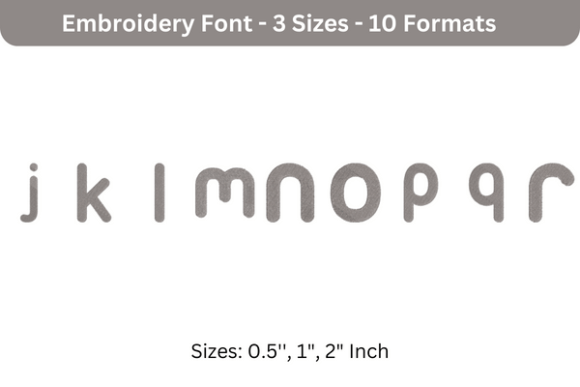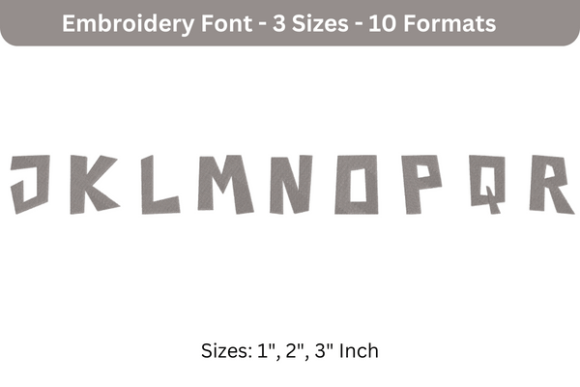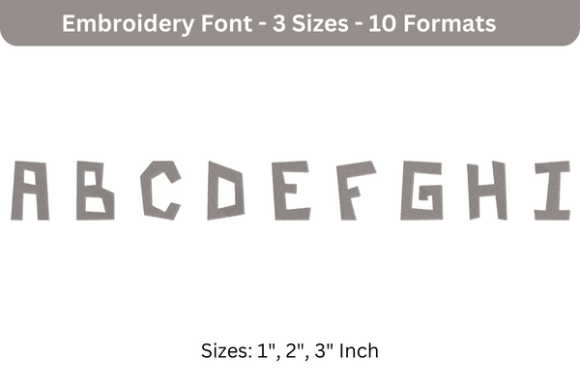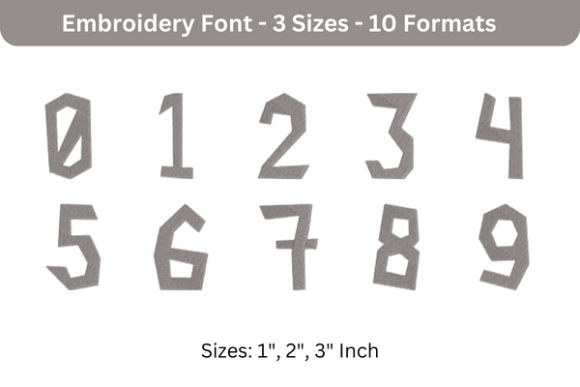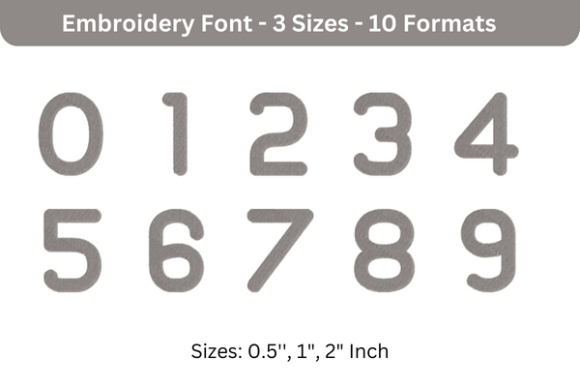
Ubuntu Font 0 to 9
When I first loaded the Ubuntu Font 0 to 9 into my embroidery software, I was looking at it purely through a small business lens. As an embroidery designer who works daily with handmade shops, local cafés, pet brands, and boutique apparel lines, I need every machine embroidery design to pull its weight. This isn’t just a decorative numeral set—it’s a branding tool waiting to be stitched onto uniforms, caps, tote bags, and custom merch. The clean, modern structure of the digits immediately caught my eye. There is no unnecessary flourish, no overly ornate serif, just a balanced, highly legible character that reads professionally on almost any fabric. For shops searching for an embroidery file that can handle everything from employee apron numbers to limited‑edition product labels, Ubuntu Font 0 to 9 deserves serious attention.
First Impressions: A Numeric Font Built for Merch, Not Just Monograms
The product description states it plainly: this is a high‑quality embroidery font meant to personalize designs with names, dates, or quotes. Having tested hundreds of digitized alphabets, I immediately recognized a few strengths. The numerals display a consistent x‑height across zero through nine, which means when you place “2025” or “#3” on a chest logo, the visual rhythm stays tight. There is no awkward dip or rise that can happen with poorly digitized embroidery fonts. The letterforms feel neither too playful nor too sterile. Instead, Ubuntu Font 0 to 9 lands in that highly desirable territory where it reads as modern, friendly, and incredibly approachable—the kind of mark you’d trust on a handmade candle label or a florist’s work apron. For a business that wants to keep brand identity consistent across multiple products, this neutral‑progressive look is an asset. You can pair it with a delicate script for a boutique feel or stack it beside a bold sans‑serif wordmark for an urban cap design.
Why a Dedicated Numeric Embroidery Font Changes Your Business Game
Most small business owners start their merch journey with a single logo file. Then they realize they need size variants, establishment years, limited‑edition release numbers, or staff names. That’s exactly where a digitized font like Ubuntu Font 0 to 9 steps in. Instead of paying for custom digitizing every time you create a “batch 03” tote bag or a “since 2019” patch, you keep the design fully in‑house. I’ve used similar numeric embroidery files to quickly number a bakery’s pastry bags, add sleeve accents to a creative studio’s work shirts, or mark anniversary dates on a brand’s loyalty gift sets. Because the font is solely focused on digits, it eliminates the distraction of letters you may never use. Each number becomes a design asset you can drop into any layout that needs a consistent, recognizable digit style.
Embroidered Patches and Apparel Branding
The most obvious use case is the embroidered patch. I frequently help small brands design morale patches, reunion event patches, and product-drop identifiers. With Ubuntu Font 0 to 9, you can build a series of numbered patches that mark your shop’s collection—think “01” for the first ceramic mug release or “50” for a golden edition. On a patch, the digit shapes remain readable because the stitch density appears balanced. You’ll want to test at a reduced scale, but from what I see, the design holds up well against the dense fill of a background twill. For custom apparel, I’d trust these numbers on a left chest position, jogger side label, or even a cap side panel. When I lay out a cap embroidery design, I avoid excessively small lettering that can swallow thread; these numbers, sized around 1.5 cm, maintain clarity.
Custom Promotional Products and Packaging Accents
Watch the Stitch Density on Small Patches
Every machine embroidery design performs differently under a needle. When you first test Ubuntu Font 0 to 9, I strongly recommend running a stitch‑out on a dense, flat cotton identical to your final product. Look at how the inside curves of “0”, “6”, and “8” fill in. If you go too small—below about 10 mm in height—the center voids can close up, especially with thick thread. For patch designs where tiny numbering is critical, consider bumping the digit size or choosing a slightly heavier stabilizer. The design itself seems well‑digitized, but I always verify exact stitch count and trims before committing a production run. The product page notes this is a high‑quality embroidery font, so I anticipate clean pathing, but the responsibility to test on your fabric remains yours.
Fabric, Stabilizer, and Hoop Size Tips
What fabric will you embroider on? An apron made from heavy cotton canvas behaves very differently from a soft, brushed‑back hoodie. For structured items like caps or stiff tote bags, I use a medium cutaway stabilizer and a firm topping to keep those numeral edges crisp. On dark uniforms, pay attention to thread color contrast. A bright white “7” on black fabric showcases the font beautifully, but if you try a metallic or thin polyester thread, slight pixel‑level offsets can muddy the digit shape. I also advise checking the hoop size requirement before starting. While this embroidery file likely fits standard hoops, larger numbers might push the boundaries if you’re also carrying a logo. Do a trial run, measure your maximum lettering area, and confirm you have the right hoop before you promise a client a numbered sleeve patch.
Building Trust Through Consistent Numeric Branding
You might not think a set of numbers influences customer perception, but it absolutely does. Imagine a local coffee roaster that stamps every bag with a roast date using Ubuntu Font 0 to 9. When the digits match across labels, the brand suddenly feels organized, professional, and detail‑oriented. That consistency builds trust. I’ve seen a handmade cosmetics brand lift its perceived value simply by numbering its seasonal launches with a clean, modern digit font instead of handwriting the batch number. For an Etsy seller or a merch creator, that visual consistency directly impacts repeat purchase behavior. A buyer who sees a thoughtfully numbered product is more likely to assume the entire shop runs with the same care. Whether it’s a staff uniform with an embroidered employee number or a limited‑edition cap with a stitched “01/50”, the machine embroidery design you choose sends a message. Ubuntu Font 0 to 9 sends the message of clarity, fashion‑neutral aesthetics, and smart production.
Designer’s Workflow: How to Test Ubuntu Font 0 to 9 Like a Pro
Before I press the start button on a commercial run, I follow a repeatable checklist. I recommend every small business owner do the same when working with any digital embroidery file. First, test in black and white. Load a simple patch shape on your screen, place a couple of numbers, and print a printable mockup for client approval. Even better, export the stitch‑preview and see how the thread lays on your chosen fabric. Second, compare Ubunta Font 0 to 9 beside your existing design assets. Does it feel like it belongs to the same family? If your logo uses a thick slab serif, these modern numerals might clash—or they could offer an intentional contrast. Third, run a stitch test on a scrap of the exact fabric with your intended stabilizer. Look for pulling, distorting, or thread breaks. Fourth, check the commercial license. The product description indicates this embroidery design can be used to personalize any fabric you wish, but I always advise contacting the seller to confirm that finished products can be sold without restriction. Nothing stalls a small biz faster than a legal gray area.
Where Ubuntu Font 0 to 9 Truly Belongs in Your Product Lineup
After evaluating the digit from every angle, I see its strongest role in branded merchandise programs. It’s tailor‑made for back‑to‑school campaigns—put locker numbers on gym bags, graduation years on senior hoodies, or team numerals on spirit wear. A bakery can number bread bags, a pet brand can stitch treat jar dates, and a florist can add an establishment year to every apron. This is a workhorse embroidery file that doesn’t try to be overly decorative, and that’s exactly why it works. For the price of a single digitized design, you get ten perfectly matched numeral characters that slot into almost any layout. I will still pair it with a solid letter font for full company names, but for quick, scalable, repeatable numbering that keeps my brand looking sharp, Ubuntu Font 0 to 9 is now in my shortlist of go‑to digitized assets.