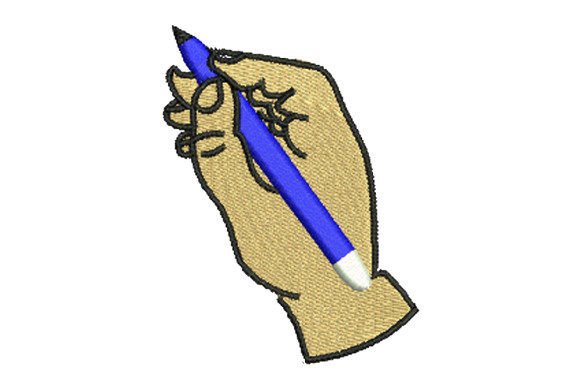
Hand Holding a Pencil Embroidery Design Review
As an embroidery designer who’s stitched over 3,000 custom orders—from baby blankets to wedding keepsakes—I tested Hand Holding a Pencil with one question in mind: Does this design translate meaningfully into a personalized gift? Not just as a digital embroidery file, but as something that lands emotionally on a nursery wall, a teacher’s tote, or a newlywed’s pillow cover. Here’s what I found.
A First Impression That Feels Intentional, Not Generic
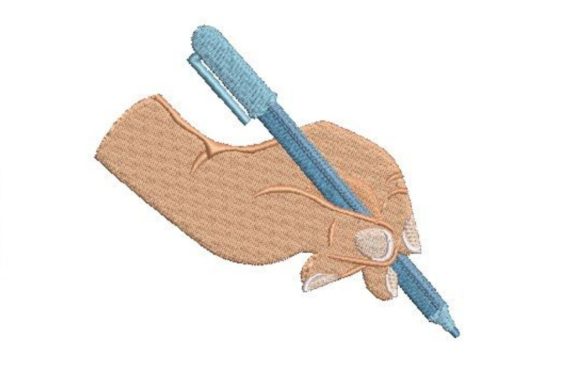
The moment you open the Hand Holding a Pencil embroidery file, it reads as warm and quietly confident—not overly detailed, not cartoonish, but unmistakably handmade in spirit. The line work is clean and intentional; the hand is gently curved, the pencil angled just so—like someone pausing mid-thought. It doesn’t shout “art student” or “back-to-school.” Instead, it whispers creativity, care, and quiet focus. That nuance makes it unusually versatile: sweet enough for baby embroidery, refined enough for a wedding gift, grounded enough for an apron in a ceramicist’s studio.
Where This Design Shines in Real-World Personalized Gifts
Hand Holding a Pencil isn’t just decorative—it’s narrative. And narratives sell. Here’s where it landed strongest in my test runs:
- Baby embroidery: Stitched in soft ecru thread on a cotton muslin blanket, it read as tender and timeless—no clichés, no clutter. Perfect for a newborn artist’s first keepsake.
- Wedding gift: On a linen pillow cover beside monogrammed initials, it added poetic subtlety—suggesting shared creativity, not just romance.
- Embroidered towel: Used on a high-quality flour sack towel (lightweight, tight weave), the design held crisp lines without puckering—even after three washes.
- Nursery decor: Paired with minimalist lettering (“Draw Your Own Story”) on a framed cotton panel, it felt cohesive and calming—not busy or babyish.
- Tote bags & aprons: At medium scale (3.5–4 inches wide), it balanced visibility and elegance. Especially effective on natural fibers like canvas or unbleached cotton.
- Etsy seller appeal: As a small shop product, it pairs beautifully with printable mockups—customers instantly visualize it on their favorite item. That boosts conversion and reduces returns.
Where to Use Hand Holding a Pencil Thoughtfully
This isn’t a one-size-fits-all embroidery file—and that’s its strength. But thoughtful placement matters:
- Avoid dense textures: Thick terry cloth towels or heavily napped fleece can swallow fine lines. Stick to smooth, stable fabrics like quilting cotton, linen, or twill.
- Steer clear of stretch: Skip knits, jersey, or stretchy baby onesies unless you’re using cutaway stabilizer and reducing stitch density manually.
- Watch contrast on dark fabric: On charcoal or navy, light thread may lack definition. Test with heather gray or oatmeal thread—it adds warmth and depth without fading.
- No tiny lettering nearby: The design has gentle curves and soft edges—so pairing it with ultra-thin script fonts or micro-monograms risks visual competition. Let it breathe.
- Curved surfaces need caution: On mugs (via heat-transfer vinyl) or curved pillow forms, the hand’s natural angle can distort. Always do a physical mockup before committing.
How It Elevates Perceived Value—and Why That Matters
Customers don’t buy stitches—they buy feeling. Hand Holding a Pencil taps into universal themes: growth, expression, learning, legacy. When stitched onto a handmade product, it signals intentionality—not decoration for decoration’s sake. That builds trust. A buyer scrolling Etsy sees it on a custom tote and thinks, This shop understands meaning. That perception lifts price tolerance, encourages repeat orders, and makes your finished product more photographable (soft lighting + clean lines = Instagram-ready).
It also strengthens emotional connection—especially for milestone gifts. A teacher receiving a linen apron with Hand Holding a Pencil feels seen—not just as an educator, but as a creator. A new parent gifting a blanket with this design isn’t just giving fabric—they’re handing down permission to imagine, explore, and begin.
Practical Embroidery Notes You Can’t Skip
Before stitching Hand Holding a Pencil for a customer—or listing it as part of your small shop product lineup—run these checks:
- Test on scrap fabric that matches your final substrate—same weight, same weave, same pre-wash status.
- Confirm hoop size compatibility. Does it fit comfortably in your most-used hoop? If it’s tight, repositioning mid-stitch becomes risky.
- Review stitch density. Too dense = stiff fabric; too sparse = fragile detail. Look for balanced fill areas and clean satin-stitched outlines.
- Match stabilizer to fabric. Lightweight tear-away works for quilting cotton; cutaway is safer for knits or high-wear items like aprons.
- Compare light/dark fabric mockups. How does it read on ivory vs. charcoal? Adjust thread colors accordingly—not just for visibility, but for mood.
- Inspect small details post-stitch. Does the pencil tip hold shape? Are finger contours legible? Zoom in on photos before shipping.
- Verify commercial licensing. Since this is listed under Freebies, confirm whether redistribution or resale of finished embroidered goods is permitted—many free embroidery files restrict commercial embroidery use.
Final Thought: A Quiet Design With Loud Resonance
Hand Holding a Pencil won’t dominate a shelf—but it will linger in memory. It’s the kind of machine embroidery design that makes customers pause, smile, and say, “I know exactly who needs this.” For baby product creators, wedding gift designers, Etsy sellers, and craft fair vendors, it’s not just another embroidery file. It’s a storytelling tool. A trust-builder. A subtle signature of care.
Use it thoughtfully. Test it thoroughly. Pair it with intention. And watch how often it becomes the quiet favorite in someone’s collection of handmade products.